A Country Walk Is Not Automatically the Best Plan
A country walk need not define your rural break. Choose a route that suits the group, ground and weather, with a clear turning point and room to stop.
The common mistake on a rural break is choosing a long country walk simply because the countryside is there. That can turn a sore foot, a wet path or one person’s quiet reluctance into the day’s main problem. A walk works better as one option among several ways to spend time away.
Start with what you want to notice: a village’s old buildings, a stretch of woodland, birdsong from a garden bench or the shape of the hills from a lane. Think of a route like a library book: you can put it down when it stops suiting you. The aim is to meet the place at a pace that feels good, not to earn the afternoon.
What do you want to notice on a country walk?
Give the outing a small focus before choosing a path. A village walk might take in a churchyard, a green and a shop; a woodland path might offer shade and birdsong; a garden or estate route might bring you close to planted borders without a long excursion.
This changes the question from “How far should we go?” to “What would we enjoy seeing?” A short lane can be absorbing if you pause to look at stone walls, field gates or the way a stream crosses beneath the road. A longer route is worthwhile only if its scenery and effort appeal to the people going.
How can you choose a route that suits everyone?
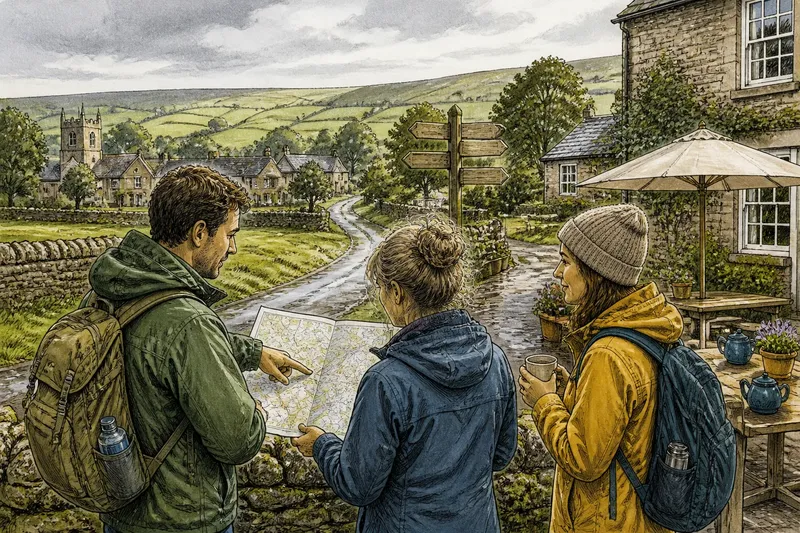
Before setting out, agree on the route’s purpose, the ground underfoot and a natural point where the group can turn back. A bridge, village shop or signed junction makes a clear decision point. If some people want to continue and others do not, settle the return arrangements together rather than leaving anyone to guess.
- Check the route surface on a map or local route description; if it includes muddy field edges and someone has unsuitable footwear, choose a paved village circuit instead.
- Check whether the path has a clear turning point; if it does, agree to reassess there, and if it does not, choose a route with an easier return.
- Check the sky, wind and visibility from a sheltered spot; if conditions feel uncomfortable, opt for a brief outing near the village or stay indoors.
- Check each person’s appetite for walking; if the group wants different things, choose a short shared stroll followed by separate activities if everyone agrees.
- Check whether the route passes a place to pause, such as a bench or café; if it does, use that as a natural break, and if it does not, select a route with a comfortable stopping place.
- Check signs and any local guidance before entering a path or site; if access is restricted or unclear, follow the notice and choose another route.
Imagine a couple staying in a cottage with a friend who has arrived after a tiring journey. The morning is grey but calm, one person wants a long ramble, and the friend would like fresh air without a demanding outing. They check a local map, choose a short lane loop that passes the village café, and agree to stop there before deciding whether to walk further. The result is a shared outing with a clear pause and an easy alternative: the friend can head back while the keen walker continues only if the return plan is understood and comfortable for everyone.
What should you bring for a short countryside outing?
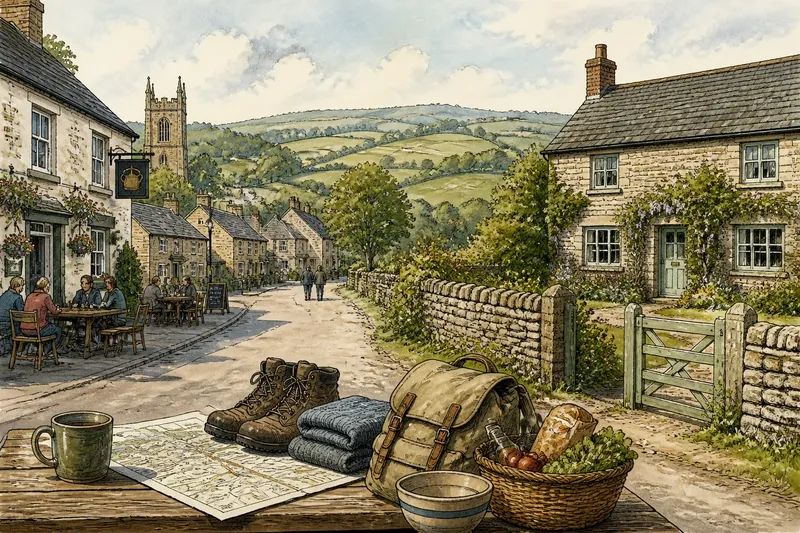
Match what you carry to the route rather than packing as though every walk were remote. For a familiar village circuit, suitable footwear, a weather-appropriate layer and water may be enough; an unfamiliar or more isolated path calls for route information and more careful preparation.
Look at the ground as well as the forecast. A paved path and a muddy field edge ask for different shoes, while exposed routes can feel less sheltered than a map suggests. Follow signs and local guidance, and choose another plan if the conditions or terrain seem beyond the group’s comfort.
What if the walk is not the right choice today?
What can you do on a rainy day in the countryside?
Choose a local bookshop, tearoom or small museum if one is open and suits the group. At the accommodation, reading, cards or sketching the view can make a quiet afternoon feel deliberate rather than like a failed walk.
What if people want different kinds of outing?
Try a short shared walk with a clear stopping point, then agree whether some people would like to continue while others return or settle somewhere warm. A nearby village circuit can offer company without making a longer ramble the price of joining in.
How do you know when to turn back?
Turn back when the ground, weather or group’s comfort changes enough that continuing no longer feels like a good choice. If the route has a pre-agreed turning point, use it to check in; if conditions worsen earlier, return then.
Is staying in a waste of a rural break?
No. A quiet spell with a book, a view through the window or a conversation over tea can be part of the stay, not time that needs to be justified.
How can you make a country walk feel unhurried?
Choose one thing to look out for and allow pauses for it: a footbridge, an old boundary wall or a view across fields. That gives the outing a shape without turning it into a timetable. If the group has had enough, ending early is a sound decision, not a failure to complete the plan.
When you plan a country walk, let its purpose and the people going decide its length. A short route with a comfortable stopping place can leave more room to enjoy the surroundings than a longer walk chosen by default. Back at the cottage, take off muddy shoes, put the kettle on and let the next part of the day emerge at its own pace.