Before the Weekend Break: When Country Houses Became Places to Stay
Country house stays vary from family homes with guest rooms to dedicated hotels. Learn how the formats differ and what to check before you book.
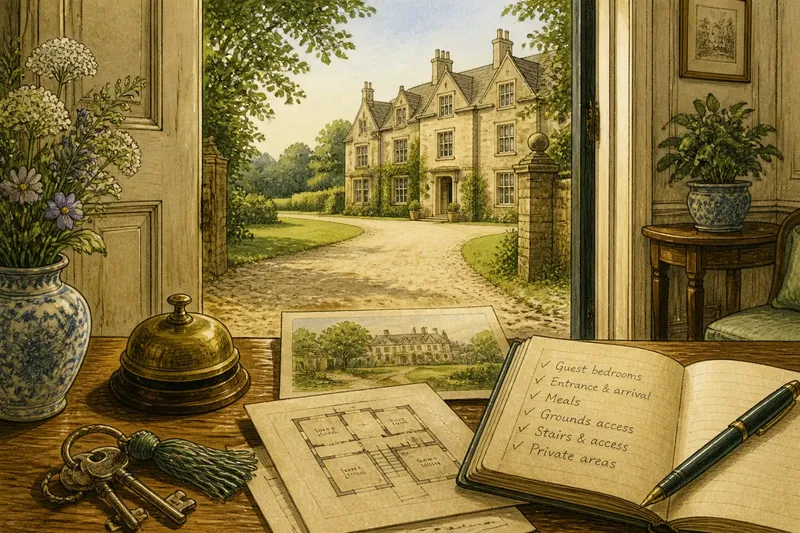
The common mistake with a country house stay is to assume that a grand house was always a hotel waiting for guests. A country house stay might still be part of a family home, or it might operate as a dedicated hotel; the building’s age alone will not tell you which.
What did a country house mean before guests could book?
A country house was a home and, often, the centre of an estate. Its rooms served domestic life, while the surrounding land could support farming, woodland management or other work. The house might also express its owners’ wealth and social position, but its purpose varied with the household and place.
Visitors were not necessarily strangers. Relatives, friends and business contacts might stay by invitation, with access arranged by the household. That kind of hospitality differs from a public booking: guests could not assume that a room was available simply because the house had bedrooms.
How did some country houses begin welcoming paying guests?
There was no single route from private home to visitor accommodation. In some places and periods, changes in transport and leisure travel made certain rural properties easier for visitors to reach; owners also made different choices about how to use their buildings. The details depended on local circumstances, so it is misleading to describe every house as following the same timeline.
Some properties came to offer overnight rooms, while others opened selected interiors or grounds for visits without providing accommodation. A house’s present-day label may cover several arrangements, from a hotel-like business to a home with a small guest area. The useful distinction is what visitors can actually book and access.
What changes when a private home takes guests?
A household can organise its day around its own needs. Guest accommodation has to make practical matters clear: where to arrive, whom to contact, which rooms are available, and how meals and shared spaces work. Those arrangements need not erase the house’s domestic character, but they do shape a visitor’s experience.
Bedrooms and bathrooms are only part of the picture. A property also needs a way to handle bookings, prepare rooms, explain access and tell guests what to expect. Owners or operators decide which parts of the house remain private and which become part of the stay.
Imagine a former estate house whose owners want to welcome visitors while keeping family rooms private. They set aside guest bedrooms, identify a clear entrance and explain which sitting room guests may use. The likely result is a stay with a defined guest area rather than access to the whole home; visitors should check those boundaries before booking.
What should you check before booking a country house stay?
Use the property’s own description to compare the arrangements, rather than relying on a broad label such as “historic” or “manor”. For each point below, check the stated details and follow the relevant decision:
- Private or dedicated accommodation: Check whether residents use the house during your stay. If they do, decide whether shared domestic life suits you; if you prefer a hotel-like setting, look for a property described as dedicated guest accommodation.
- Room access: Check which bedrooms and shared rooms are included. If access is limited to named spaces, decide whether that suits your plans; if you want broader access, ask what other areas are open to guests.
- Stairs and room layout: Check the room description for stairs, bathroom location and any access notes. If the route does not suit your needs, ask the property about an alternative room; if no suitable option is available, choose elsewhere.
- Meals: Check whether breakfast, dinner or other meals are offered and how they are arranged. If the available service fits your plans, book accordingly; if not, identify an alternative place to eat before travelling.
- Arrival arrangements: Check the arrival instructions and the times when someone can help. If your journey fits those arrangements, follow the stated process; if it does not, contact the property before booking or choose a more suitable option.
- Gardens and grounds: Check which outdoor spaces guests may use and whether access is separate from the stay. If the grounds are included and matter to you, confirm any access conditions; if they are not, treat them as a separate attraction rather than part of the accommodation.
How do country house stays differ?
Some properties operate much like small hotels, with a reception point and regular dining arrangements. Others feel more residential, with shared rooms and a smaller guest area. Neither format is inherently more authentic; the difference lies in the service and access offered.
The building’s layout can affect the stay, too. A house with formal reception rooms may have bedrooms elsewhere, while later alterations can create a different pattern of guest spaces. Read room details and access notes rather than assuming that the façade tells you how the interior works.
Ownership and management can shape the boundaries as well. A family may continue to live in part of a property, or an organisation may run the entire building for visitors. Ask what spaces are private, shared or open to the public if the description leaves that unclear.
What do travellers ask about country house stays?
Is a country house stay the same as a country house hotel?
Not necessarily. The phrase can describe a dedicated hotel or guest rooms within a home, so check who operates the accommodation and what spaces are available.
Does a historic house include access to its grounds?
Not by default. Check whether gardens or other outdoor areas are included with your booking, separately ticketed or closed to guests.
Will a historic room have modern fittings?
That depends on the property and room. Check its description for bathroom arrangements, stairs and other details that affect your comfort or access needs.
How can I tell whether meals are included?
Read the booking details for the specific room and dates. If they do not say clearly what is provided, ask the property before confirming.
What can a house’s earlier use still tell you?
Its rooms, grounds and domestic details can give a stay a distinctive setting, but they do not reveal the practical terms of a booking. A long corridor or a formal drawing room may speak to the building’s history; it does not tell you whether guests can use that room or where to find dinner.
Think of the house like a family dining table made available as a shared workbench: the object remains recognisable, but its users need clear rules. The most useful clue is not age by itself, but the way the property explains what is preserved, shared and adapted.
For a country house stay, compare the room description, arrival instructions, meal arrangements and access notes before you commit. Those details reveal whether the visit is centred on a private home, a hospitality business or a mixture of the two—and help you choose a place whose pace and boundaries suit your break.