A Rainy Arrival Evening, Planned Around One Good Meal
Plan a rainy arrival evening around one good meal: choose a flexible countryside supper, keep the journey home simple and leave the rest of the night clear.
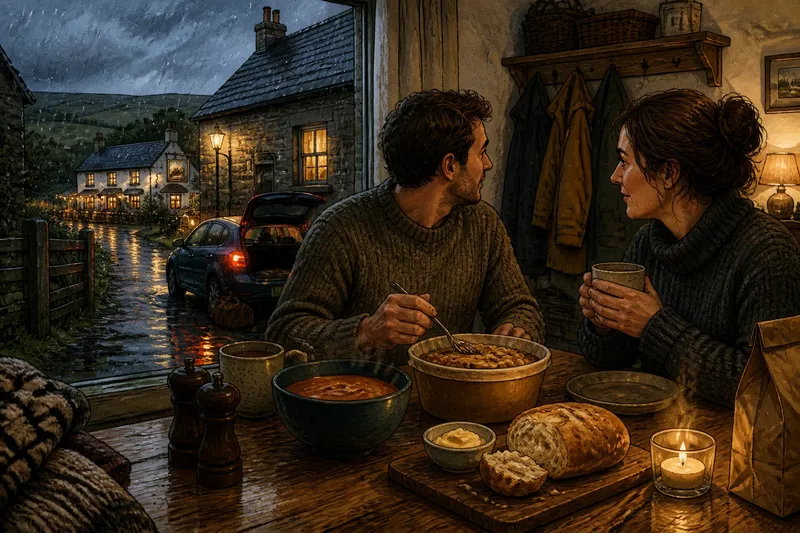
The common mistake on a wet countryside arrival is trying to rescue the evening with a full itinerary: unpack, find a pub, visit a shop, cook something elaborate and still feel rested. A rainy arrival evening works better when one good meal is the reason to go out—or the centrepiece of staying in—and everything else is allowed to fall away.
Imagine you and a friend reach a rented cottage near a village after a slow drive through rain. Your bags are damp at the edges, the lane to the door is unfamiliar, and you have not yet bought groceries. The useful decision is not how to fit in more. It is which meal will feel satisfying without demanding another round of effort.
What should the first evening be for?
In this invented situation, the evening has one job: help you arrive. That means eating something substantial, getting warm and becoming familiar with the place. A plan built around those needs can feel deliberate without turning supper into an event that must go perfectly.
Start by separating the meal from the rest of the night. You might choose a village pub for a hot dinner, a nearby takeaway with a short collection trip, or a simple meal at the cottage. The right option depends on your arrival time, how tired you feel and what is actually available; the meal need not be impressive to be memorable.
Think of the rest of the evening as a coat hook: it holds what you need, but it should not become another thing to carry. Dry clothes, a drink and a comfortable chair may be enough after supper. There is no need to add a scenic drive in the dark or a second destination just because you have arrived somewhere appealing.
How do you choose one meal before setting off?
Choose by friction as well as appetite. A promising restaurant can be a poor fit if it requires a long drive on unfamiliar lanes, a late booking or a walk from a distant car park in heavy rain. A less ambitious place nearby may make the whole evening easier.
Before leaving home, look for a short list of practical details: opening hours, whether the kitchen serves food at your likely arrival time, how to reserve, and whether you can reach the entrance without a lengthy exposed walk. Check the venue’s own current information, and contact it if a detail matters to your plan. Rural kitchens may close between services or on particular days, so a name saved on a map is not the same as a workable supper option.
Match the meal to the kind of arrival you expect. If you will be hungry and tired, a pub serving a familiar hot dish may be more appealing than a place built around a long, leisurely meal. If travel tends to unsettle your appetite, a small local shop and a straightforward cottage supper may suit you better than committing to a booking.
For the imagined pair, the decision is a pub in the nearest village, provided the kitchen is still serving when they arrive. They save its telephone number and identify a nearby alternative that offers food to take away. That backup is not a second evening plan; it is a way to avoid starting the night with a search in the rain.
What makes the meal satisfying without making it a project?
A good first-night meal needs enough substance to settle hunger, but it does not need several courses or elaborate ordering. If you are eating out, each person can choose a main they will genuinely enjoy and decide on anything extra at the table, rather than planning a celebratory feast before the drive is over.
If you are staying in, keep the food familiar and the preparation light. A loaf of bread, good cheese, soup from a local shop, or a ready-made pie can become a proper supper with little more than a plate and a warm kitchen. Bring a small amount of food that can wait in the car or a bag, so a delay does not leave you choosing between cooking from scratch and going back out.
Say the pair discover that the pub kitchen has stopped taking orders just before they arrive. They use the alternative they checked earlier: collect a hot takeaway from the village and eat at the cottage table. The observable result is simple—there is still a warm, filling supper, and neither person has to search for another open place while wet and hungry.
The lesson is to plan for a meal, not to defend a particular venue. A reservation can be a useful anchor, but the evening should survive a changed arrival time or a closed kitchen. Keep the backup close and uncomplicated, and let the food rather than the setting do the comforting.
How should you handle the wet arrival itself?
Make the transition from car to supper short. Keep a dry layer, a torch and the accommodation details easy to reach, rather than buried beneath luggage. Once inside, take a moment to locate the heating controls, kettle, towels and somewhere to hang wet coats; these small discoveries can prevent a simple evening becoming a rummage.
If you are going out again, decide whether the weather and route still make sense after you have arrived. A short drive to a familiar village may feel manageable; a dark, narrow lane followed by a long walk may not. If the conditions have worsened, use the food backup and stay put. The point of the plan is a satisfying supper, not proving that you can stick to the original version.
For the pair in the example, one person brings in the bags while the other checks the cottage and changes into dry clothes. They then make one decision about food and leave the remaining unpacking for the morning. That small division of effort gives the evening a clear shape without turning settling in into a list of chores.
Which small choices make the evening feel settled?
- Choose the meal before the drive. Decide whether you are eating out, collecting food or staying in, so hunger does not make every option seem urgent.
- Check the kitchen’s serving window. Confirm that your likely arrival time fits, and note how to contact the venue if plans shift.
- Keep one nearby fallback. Choose a simple alternative that does not require another long journey or a complicated reservation.
- Pack a dry change where you can reach it. A warm top and dry socks can make the move from wet travel to supper much more comfortable.
- Bring a modest food buffer. Something easy to eat can cover a delay without becoming a second meal plan.
- Leave the rest of the night unbooked. After supper, let conversation, a book or an early night be enough.
These are choices, not rules. If a late arrival makes even a short drive feel tiring, staying in is a sensible use of the plan. If the weather clears and you feel lively, a brief look at the village can be an option, not an obligation.
What do people ask about a rainy arrival evening?
Should you book dinner before reaching the cottage?
Book if the venue is popular, serves food for a limited period or would be difficult to replace nearby. If your arrival time is uncertain, ask whether the kitchen can accommodate a late change and keep a low-effort alternative in mind.
What food should you bring for the first night?
Choose food that can be eaten with little preparation, such as bread, fruit, cheese or a ready-made soup, and consider what can travel safely. Check the accommodation’s facilities before relying on an oven, fridge or other equipment.
Is a pub meal better than cooking after the drive?
It depends on the journey, the pub’s location and how much you want to do once you arrive. A nearby pub can spare you the work of cooking, while a simple cottage meal can remove the need to drive again in poor weather.
What if the weather makes the planned meal difficult?
Choose the option that keeps travel and effort manageable, whether that is collecting food, eating what you brought or using a nearby delivery service if one operates locally. If the conditions or route seem unsafe, do not set out merely to preserve a dinner plan.
What should the example change about your own plan?
In the imagined evening, the pair’s success does not depend on reaching a particular table. They have one meal in mind, a nearby alternative, and a clear permission to do very little afterwards. If the pub works out, they eat there; if it does not, supper still happens without a scramble.
That is the useful shape of a rainy arrival evening: a warm, satisfying meal chosen for the circumstances, followed by room to settle at your own pace. When you plan a rainy arrival evening, the most valuable detail may be the one you leave out—a second destination, a complicated recipe or the expectation that the first night must feel like a whole holiday. Keep the food plan flexible, and let arriving count as enough.